
Look beyond
the behaviour.
See the person.
Behaviour can be a way of communicating that something matters, something is difficult or something needs to change.
At Alchemy, we begin with curiosity rather than judgement. We take time to understand the person, what matters to them and what may be happening around them.
By listening, noticing patterns and looking at the wider picture, support can become more respectful, practical and connected to what the person needs.
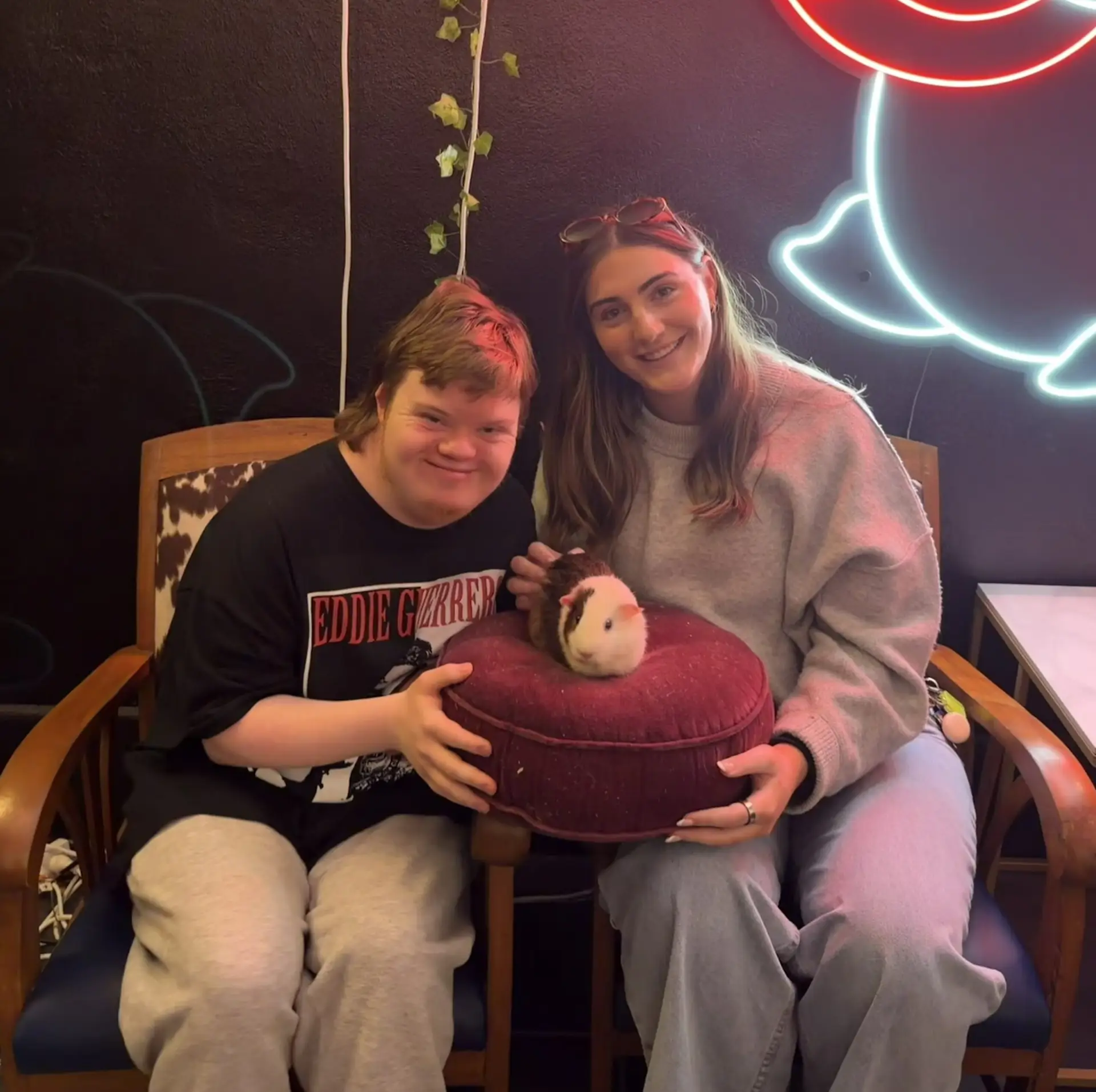
Understanding starts by looking beyond what we can see.
Support begins when people feel seen, heard and understood.
Behaviour never exists in isolation. The person, their communication, relationships, experiences, environment and what matters to them are all part of the picture.
See the whole person.
Strengths, preferences, communication, relationships and lived experience matter just as much as the behaviour others may notice.
Listen in ways that work for them.
Everyone communicates differently. We make space for the person's voice, choices and preferences using communication that makes sense for them.
Look beyond what is happening.
Instead of jumping to conclusions, we stay curious about needs, experiences, relationships, environments and what may have changed.
Understanding changes the question. Instead of asking, “How do we stop this?” we can begin asking, “What might this person need us to understand?”
Behaviour may be telling us something important.
Before asking how to stop a behaviour, it can help to pause and wonder what might be happening for the person.
Behaviour can be influenced by many things. There may be a need that is difficult to express, something in the environment that feels overwhelming, a change that is hard to navigate, or an experience we do not yet understand.
Communication
Is the person trying to express a need, preference, choice, boundary or feeling in the way available to them?
Health & wellbeing
Could pain, discomfort, tiredness, hunger, stress or another wellbeing factor be contributing?
Sensory experience
Is something too loud, bright, busy, unpredictable or otherwise difficult for the person to process?
Change & uncertainty
Has a routine, relationship, expectation, environment or other part of life recently changed?
Connection & relationships
What is happening between the person and the people around them, and where might greater trust or connection help?
Environment & expectations
Are the surroundings, demands or expectations supporting the person — or creating barriers that could be changed?
There isn't one explanation for every behaviour. Understanding grows when we slow down, listen, notice patterns and remain open to what the person and their world may be showing us.

Take the time to understand the whole picture.
One difficult moment rarely tells the whole story.
Understanding behaviour means looking more widely at the person — their strengths, communication, relationships, routines, health, experiences, environment and what matters to them.
It also means noticing what is already working. The moments where someone feels comfortable, connected, confident or understood can tell us just as much as the moments that are difficult.
Strengths
What does the person enjoy, value and already do well?
Patterns
What tends to happen before, during and after particular moments?
Environment
What around the person may be helping — or making things harder?
What matters
What helps this person feel safe, connected, respected and themselves?
We don't begin with “What's wrong?”
We begin with “What can we understand?”
Understanding is only useful when it helps create better ways forward.
Behaviour support is not about making someone easier to manage. It is about finding practical ways to support communication, participation, wellbeing, connection and everyday life.
Learn from the person.
Start with their strengths, preferences, communication, experiences and what matters to them.
Change what can be changed around them.
Explore routines, expectations, sensory experiences, relationships and surroundings that may be helping or creating unnecessary barriers.
Develop skills and alternatives.
Support communication, choice, coping, participation and practical ways for the person to express or meet their needs.
Strengthen the people around them.
Help families, carers and support teams build shared understanding and respond in ways that are respectful, consistent and practical.
The goal isn't simply less behaviour.
It's more understanding, connection, choice, confidence and quality of life.
Better understanding grows when people work together.
No one person sees every part of someone's life. Bringing together the right people can help build a fuller, more useful understanding of what is happening and what may help.
Their voice, choices, strengths, rights and what matters to them.
Family & chosen supporters
People who know the person well can bring valuable history, context and understanding.
Support workers & carers
Everyday observations can help identify patterns, strengths, changes and strategies that are working.
Health & allied health
Where relevant, other professionals can contribute important perspectives about health, communication, wellbeing and support needs.
School, work & community
Different environments can reveal different strengths, challenges and opportunities for meaningful participation.
Collaboration doesn't mean everyone makes decisions for the person. The person remains at the centre. Who is involved should reflect their choices, communication, relationships, needs and circumstances.
Support should protect the person's dignity, voice and rights.
Behaviour support should never lose sight of the person. Feeling safe matters — but so do choice, autonomy, respect, participation and being treated with dignity.
Listen to the person.
Their communication, preferences, choices and experience should help shape the support around them.
Respect the person behind the behaviour.
Difficult moments do not define someone. Language, responses and support should preserve dignity and avoid judgement or unnecessary labels.
Create more opportunity for control.
Wherever possible, support should increase meaningful choice, predictability and involvement in decisions affecting everyday life.
Build safety through understanding.
Looking at communication, environments, relationships and unmet needs can help create safer and more supportive everyday experiences.
Safety and dignity belong together.
Good support looks for ways to understand what is happening, reduce unnecessary barriers and create environments where the person has greater opportunity to communicate, participate, make choices and feel understood.
Support should feel human, not like something being done to you.
Our approach to behaviour support reflects the same principles that guide everything we do at Alchemy — relationship, respect, curiosity and the belief that every person matters.
Walk alongside.
We work with people rather than positioning ourselves as the expert on their life. The person remains in the driver's seat wherever possible.
Look through a different lens.
Behaviour can make more sense when we slow down, challenge assumptions and become curious about what the person may be experiencing or communicating.
Relationship comes first.
Trust grows through openness, consistency and genuine connection. Good support begins with knowing the person, not simply knowing about them.
Keep learning together.
Understanding develops over time. We reflect, learn, adapt and remain open to changing our approach as the person, their circumstances and their goals change.
The person is never the problem to be solved.
They are a person to know, listen to and understand — with strengths, relationships, preferences, rights, experiences and a life that is bigger than any behaviour.
Good support keeps learning and changing.
People change. Environments change. Relationships, routines, communication and goals change too.
What works today may need adjusting tomorrow. That is why we see behaviour support as an ongoing process of listening, noticing, reflecting and learning together.
Pay attention to what is happening.
Notice patterns, changes, strengths and the moments where the person appears comfortable, connected, confident or understood.
Keep hearing from the person.
Their experience, communication, preferences and responses help us understand whether support is actually working for them.
Ask what we are learning.
Look at what has helped, what has not, what may have changed and whether our understanding needs to change too.
Change the approach when needed.
Support should remain flexible. We can build on what works, adjust what does not and respond as the person's life, needs and goals evolve.
We should be willing to change too.
When something isn't working, the answer isn't automatically to expect more change from the person. Sometimes the support, environment, expectations or our own understanding need to change.
Start with a conversation, not a conclusion.
You don't need to have everything figured out before getting in touch. We can begin by listening to what is happening, what matters to the person and what you are hoping might become easier or better.
Tell us what's happening.
Get in touch yourself or make a referral on someone's behalf. Share as much or as little as you currently know.
We start by understanding.
We'll talk about the person, their strengths, communication, relationships, environment, current supports and what matters most to them.
Work out what support may help.
Together, we can explore what is already working, where things feel difficult and what practical next steps may make sense.
Not sure where to begin?
That's okay. Start with a conversation and we'll help you work through the next step.
Behaviour support can feel like a lot to understand.
You do not need to know all the terminology or have everything worked out before contacting Alchemy.
Start with what you are noticing, what matters to the person and what you would like help to understand.
Every situation is different. Questions are a good place to begin.
What is behaviour support?
Behaviour support is about understanding what may be happening for a person and exploring respectful, practical ways to support their needs, communication, wellbeing and everyday life.
It can involve learning about the person's strengths, relationships, routines, health, sensory experiences, environment and the situations in which particular behaviours occur.
The aim is not simply to stop behaviour. It is to build understanding and create support that protects dignity, strengthens choice and contributes to a better quality of life.
Is behaviour support only for children?
No. Alchemy's Behaviour Support service is for people of all ages.
The person's age, stage of life, communication, relationships, environment and circumstances all help shape how support should be approached.
We do not begin with a one-size-fits-all program. We begin with the individual person and what matters in their life.
Does behaviour support mean changing who I am?
No. Behaviour support should not be about making someone more convenient for other people or asking them to hide who they are.
A person-centred approach recognises the person's identity, strengths, communication, preferences, relationships and right to be involved in decisions affecting their life.
Sometimes the most helpful change is not something the person must do. The environment, expectations, communication or support around them may need to change too.
Who can be involved in behaviour support?
The person should remain at the centre of the support and be involved using communication that works for them.
With the person's consent or appropriate authority, other people may also contribute. This might include family members, chosen supporters, carers, support workers, educators, health professionals or other people who know the person well.
Who is involved will depend on the person's choices, relationships, needs and circumstances.
What is Positive Behaviour Support under the NDIS?
Positive Behaviour Support is an evidence-informed, person-centred approach intended to improve quality of life and help others understand and respond to a person's needs.
It can include changing environments, strengthening communication, teaching useful skills, supporting the people around the person and developing proactive ways to reduce distress or risk.
Under the NDIS, specialist Positive Behaviour Support includes regulated responsibilities. Formal NDIS behaviour-support assessments and plans must be completed by a suitable NDIS behaviour support practitioner working through a registered Specialist Behaviour Support provider.
What is a behaviour support plan?
An NDIS behaviour support plan is a formal document developed from an understanding of the person, their needs and the reasons or circumstances connected with particular behaviours.
It may describe proactive support, environmental changes, communication strategies, skills to develop, ways to respond during difficult moments and how progress will be reviewed.
The NDIS recognises interim and comprehensive behaviour support plans. Developing these plans is specialist work that must be undertaken by a suitable NDIS behaviour support practitioner through a registered Specialist Behaviour Support provider.
Is Alchemy currently a registered Specialist Behaviour Support provider?
Alchemy is currently progressing NDIS registration intended to include Specialist Behaviour Support and requirements associated with behaviour support plans and restrictive-practice safeguards.
Until that process and the required approvals are complete, we do not represent Alchemy as a registered Specialist Behaviour Support provider.
We currently provide behavioural support within our available service scope. When you contact us, we will be transparent about what we can provide, whether the request fits our current scope and what other options may need to be considered.
What is an NDIS behaviour support practitioner?
An NDIS behaviour support practitioner is a person the NDIS Quality and Safeguards Commission has considered suitable to undertake behaviour-support assessments, including functional behaviour assessments, and develop NDIS behaviour support plans.
A suitable practitioner must be engaged by a registered Specialist Behaviour Support provider or be registered as a provider themselves.
Until a practitioner has received the required suitability decision, they cannot undertake those formal NDIS assessment or plan-development functions, even under supervision.
What are regulated restrictive practices?
A restrictive practice is an action or practice that limits a person's rights or freedom of movement. The NDIS identifies regulated categories including seclusion, chemical restraint, mechanical restraint, physical restraint and environmental restraint.
Regulated restrictive practices are not a routine part of behaviour support. Where they are considered under the NDIS, strict safeguards apply.
They must only be used as a last resort, be the least restrictive response available, be proportionate to the risk, be used for the shortest possible time and meet applicable authorisation, planning, reporting and registration requirements.
Alchemy does not currently advertise or provide regulated restrictive-practice functions that depend on completion of its NDIS registration.
Can a family member, Support Coordinator or professional make a referral?
Yes. A participant, family member, nominee, carer, Support Coordinator, advocate or professional can contact Alchemy or submit a referral where appropriate.
Consent and authority will be clarified as part of the enquiry. The person seeking support should remain central to the conversation and decisions about what happens next.
You do not need to have every detail before making contact. Start with what you know and we can work through the next step with you.
Is Behaviour Support an emergency or crisis service?
No. Alchemy's Behaviour Support service is not an emergency-response or crisis service.
If someone's life is at risk or there is an immediate risk of serious harm or injury, call 000.
For non-immediate concerns, contact Alchemy and tell us what is happening. We can discuss whether the enquiry fits our current service scope and what the next step may be.
You do not need to work everything out before getting in touch.
Sometimes the first step is simply seeing things differently.
If behaviour is raising questions, you do not need to have all the answers before reaching out.
Tell us what you are noticing, what matters to the person and where things feel difficult. We can start there — with curiosity, conversation and the person at the centre.
“Look beyond the behaviour. See the person.”
Behaviour Support in Murray Bridge, the Murraylands and regional South Australia.